Agency Operations
Design Retainer vs Hiring Freelancers: How a Credit Retainer Works
Booking freelancers job by job vs a monthly credit retainer for InDesign production: real per-page maths, what credits cover, and when each one wins.
By Alexx Thanh Nguyen ·
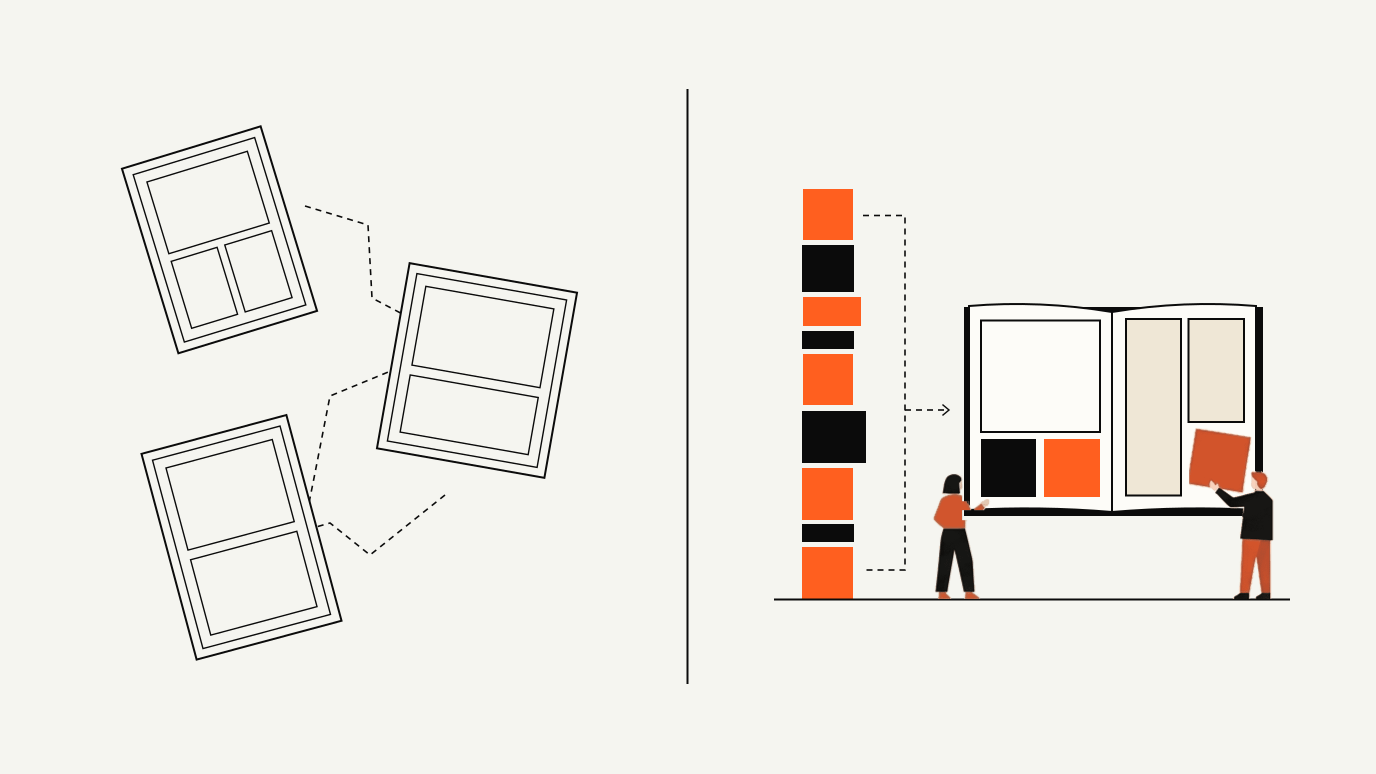
Once an agency decides to hand layout work to someone outside the studio, the next question is how to buy it. There are two common models: book a freelancer for each project as it comes in, or pay a production partner a fixed monthly retainer.
Neither is right for every studio. This article walks through what each model really costs, how a credit-based retainer works in practice, and a simple rule for choosing between them.
The Hidden Cost of Booking Freelancers Ad Hoc
On paper, project-by-project freelancing is the cheapest model: you only pay when there is work. In practice, every new project carries a set-up cost that never shows on the invoice:
- Finding someone available. The weeks when you need help most are the weeks every good freelancer is already booked.
- Briefing from zero. A new designer has to learn the brand guidelines, the template and how your team names files, every time.
- Paperwork. A new NDA, a new quote, new payment details, new approvals.
- Inconsistent files. One freelancer builds clean paragraph styles; the next one overrides everything locally. Your team pays for that later, when they open the file to make a change.
None of this matters for a single one-off brochure. It matters a lot when editorial work arrives every month, because you pay those set-up costs again and again.
How a Credit Retainer Works
A credit retainer replaces the per-project quote with a monthly pool of production time. Here is how it works at Alexx Studio, using the US price set (UK, EU, Australian and Canadian rates are listed in their own currency on the rates page):
- 40 credits a month for $3,200, billed monthly in advance. One credit is $80.
- Pages are priced by weight: a template page uses 0.5 credit, a standard editorial page 0.8 credit, and a design-heavy page (covers, openers, infographics, complex spreads) 1.5 credits.
- Extra work is hourly at 1 credit per hour, in 30-minute blocks. That covers revision rounds from round three, post-approval changes and technical tasks such as building a master template.
- A reserved slot in the overnight queue every week, so peak season doesn’t mean waiting in line.
The credit level can go up or down, from 20 to 120 credits a month, with 30 days’ notice. You can also pause or end with 30 days’ notice.
The Per-Page Maths
Credits only make sense if they save money against the project rate, so here are the numbers side by side (US rates):
| Page type | Project rate | Retainer | Saving |
|---|---|---|---|
| Template page | $50 | $40 (0.5 credit) | 20% |
| Standard editorial page | $80 | $64 (0.8 credit) | 20% |
| Design-heavy page | $150 | $120 (1.5 credits) | 20% |
Take a month with 50 standard editorial pages. Booked as a project, that’s 50 × $80 = $4,000. On a 40-credit retainer, 50 pages × 0.8 credit = 40 credits, so the same month costs $3,200.
A mixed month works the same way. Say a quarterly magazine needs 30 standard pages and 10 design-heavy openers and infographics. That’s 24 + 15 = 39 credits, which fits inside the 40-credit plan. At project rates, the same pages would cost $2,400 + $1,500 = $3,900.
What Happens to Unused Credits
This is the part every agency asks about, so it’s written plainly in the Terms of Service:
- Credits reset at the end of each 30-day billing cycle. That’s what keeps capacity reserved for each agency.
- In months one to three, unused credits don’t roll over.
- From the fourth consecutive month, up to 20% of the plan’s credits can roll into the first 15 days of the next cycle, as long as the retainer renews. Rolled-over credits are used first.
- Unused credits are not refunded.
The practical takeaway: size the retainer for your normal month, not your biggest one. If a launch month needs more, raise the credit level ahead of time or quote the extra document as a separate project.
When Ad Hoc Freelancers Still Win
A retainer is a commitment, and it isn’t the right tool for every studio. Booking per project is usually better when:
- Editorial work comes in once or twice a year, not every month.
- The volume is well under 50 pages a month.
- Each project is a different kind of document with no shared template.
In those cases, per-page project pricing keeps things simple. You still get the same NDA, the same sample-spread process and the same packaged InDesign files. You just pay for each project when it happens.
When a Retainer Wins
A retainer starts to pay off when:
- Work arrives every month, or your peaks are frequent and predictable.
- You produce over 50 pages a month, or you run recurring titles: a quarterly magazine, a seasonal catalogue, a series of reports on one template.
- You want the same designer on every issue, so the brand system is applied the same way each time.
Recurring titles are where the retainer really earns its place. The template, the styles and the brand decisions get built once. After that, every issue is production, not discovery.
A Simple Way to Decide
Count the pages you sent out (or wished you could send out) over the last six months, and look at how evenly they were spread.
- Under 50 pages a month, uneven: pay per page.
- Around 50 pages a month or more, or a recurring title: a retainer usually costs about 20% less and removes the scramble for availability.
- Not sure yet: start with one project at the per-page rate. If it works, move to a retainer once you know your monthly rhythm. A term commitment of 6 or 12 months also locks the current rate.
Retainers are limited to three agencies at a time, so the reserved slot stays meaningful. The retainer calculator shows the monthly cost for any credit level, and the first article in this series covers how to plan for peak season without hiring.